Automated Monthly Revenue Consolidation That Saves CFO Time
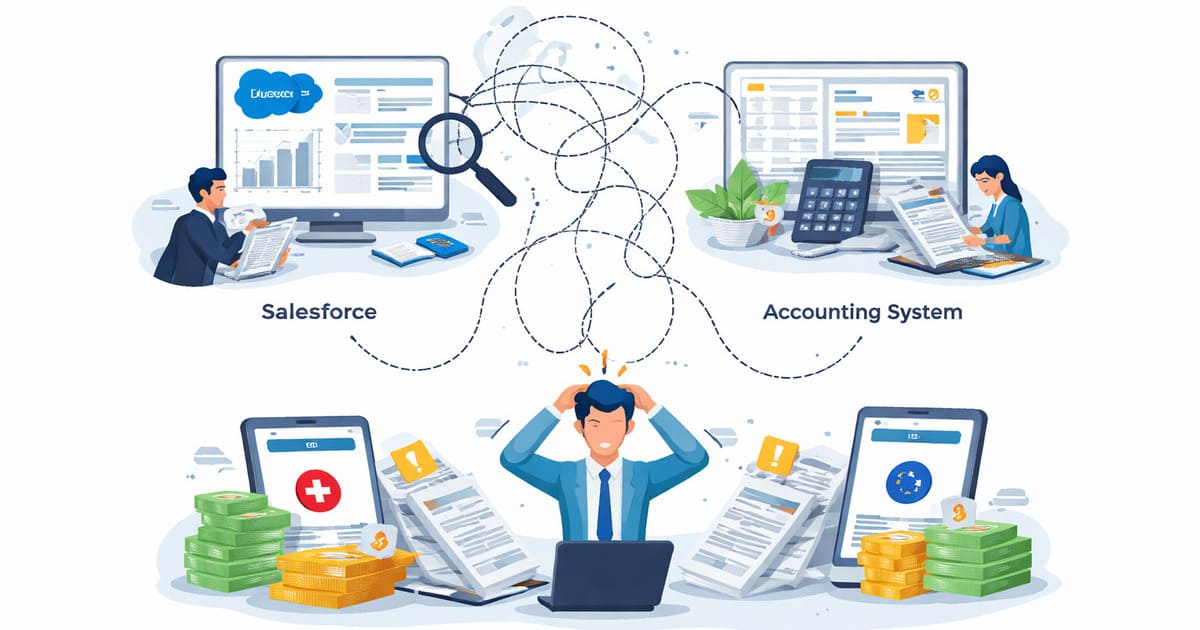
A Switzerland-based SaaS company selling cloud accounting software faced growing friction in monthly revenue reporting. Revenue data lived across Salesforce, the accounting system, and multiple Swiss and EU bank accounts—each reflecting a different version of reality.
Finance teams spent days manually exporting, reconciling, and stitching spreadsheets together just to produce a single executive view. Leadership insight arrived late, and confidence in the numbers depended on how much manual validation time was available.
The Challenge: Month-End Reporting That Consumes Human Time
Salesforce tracked bookings, renewals, expansions, and churn signals. The accounting system handled invoicing, revenue recognition, credits, and adjustments. Cash receipts arrived asynchronously through multiple bank accounts, often as partial or batched payments.
At every close, finance manually normalized formats, matched customer records, reconciled discrepancies, and investigated timing differences or posting errors. Strategic analysis and forecasting were repeatedly delayed by reconciliation work that added no long-term value.
The Goal: One Trusted Revenue View for Leadership
The CFO needed a single, defensible revenue view that clearly answered four questions at month-end: what was booked, what was recognized, what was collected, and why those numbers differed.
The output had to be executive-ready, on time, and consistent—without spreadsheet stitching, manual checks, or last-minute explanations during leadership reviews.
The Solution: AI-Driven Revenue Consolidation Across Systems
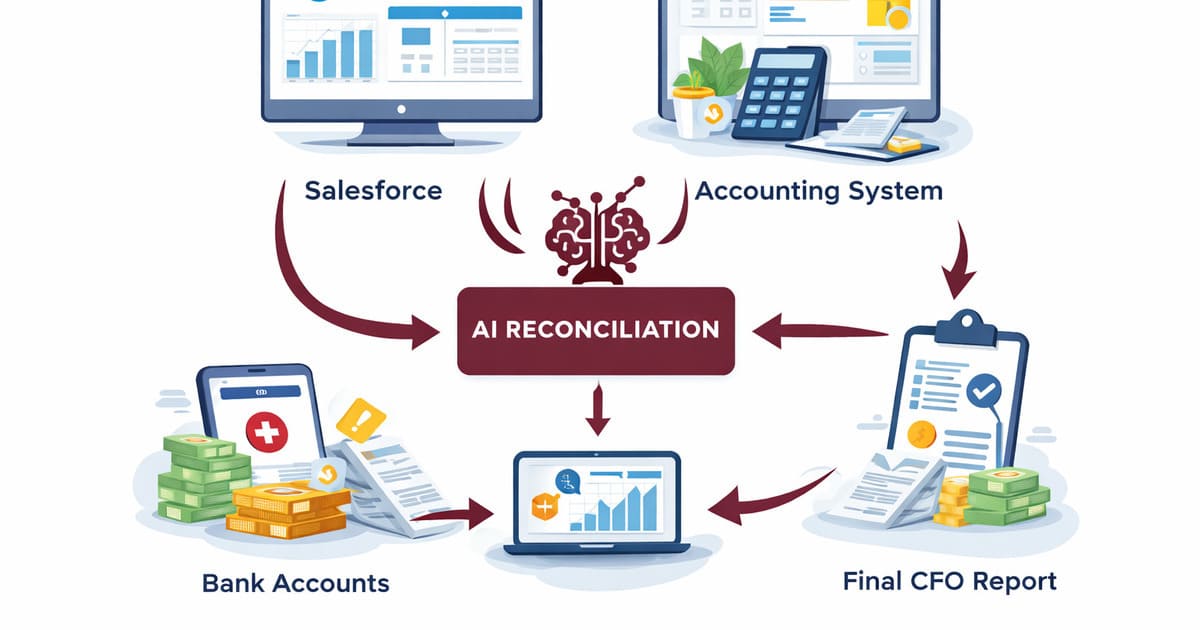
Few Good Geeks designed an AI-powered back-office automation that connects Salesforce, the accounting platform, and bank accounts into a unified monthly revenue process. The system operates as reporting infrastructure, not a one-off automation.
Each month, the workflow automatically pulls bookings, invoicing and recognition entries, and bank transactions. It matches entities across systems, reconciles bookings versus recognition versus cash, and flags anomalies with clear context instead of raw discrepancies.
The Workflow: From Fragmented Data to Executive Clarity
At month close, the automation ingests Salesforce deals, accounting records, and bank transactions. It applies agreed reconciliation logic—handling prepaid contracts, delayed settlements, partial payments, fees, credits, and refunds.
Instead of forcing finance to hunt discrepancies, the system produces a variance narrative: what changed, why it changed, and whether the difference is expected. Only true exceptions are routed for human review, with evidence attached.
Executive Output
The final output is a clean, executive-friendly report summarizing booked, recognized, and collected revenue, followed by concise explanations for key movements. Leadership can drill into details without rebuilding spreadsheets.
The Outcome: Faster Decisions and More Human Time
Monthly revenue reporting shifted from a manual fire drill to a predictable system. Leadership receives earlier insight with higher confidence, while finance reclaims time previously lost to reconciliation and validation.
55 hrs
Finance hours saved per month
83%
Automated revenue consolidation coverage
75%
Reduction in manual reconciliation work
Key Metric: Human Time Saved
Human time saved: 35–55 finance hours per month. These hours are redirected toward forecasting accuracy, pricing strategy, churn analysis, and growth planning.
Why This Matters
This automation transformed month-end revenue reporting into infrastructure: predictable, auditable, and boring in the best way. Leadership gains clarity without friction, and finance spends human time on thinking—not cleanup.